Temagog Bridge is not on any list of things to do in the Macleay Valley. It is a low concrete bridge where Temagog Road crosses the Macleay River, about half an hour north-west of Kempsey, with farmland on both sides and public access to the river at the crossing. In early October the bottlebrush along the bank was in full flower, and the honeyeaters had found it.
It is also a good one to keep up your sleeve if you are staying on the coast and a strong onshore wind sets in. South West Rocks, Hat Head and Crescent Head are all 45 minutes to an hour away. When the surf is blown out and the sand is blowing down the beach, put the kayak on the roof and spend the day on the river instead.
I spent a morning there. Here is what turned up.
Where it is
From Kempsey, follow River Street out of town until it becomes Armidale Road, then stay on Armidale Road for about 16 km. Temagog Road turns off to the left, and the bridge is 2 km along it. That is about 25 km from town. If you reach Willawarrin, you have gone about 7 km too far.
This is not a picnic area or a reserve, just public access to the river beside the bridge. You can drive right down to the water to drop off a kayak, and the river is shallow here. There is nowhere to buy anything out here, so bring your own food and water, and take your rubbish home. The land on both sides is farmland, so keep to the road and the river.
One thing to know: it is a low bridge, and Kempsey Shire Council closes it when the Macleay floods. It was shut during the May 2025 flood, along with the Bellbrook, Toorooka and Sherwood bridges. After heavy rain, check the council’s road updates before you drive out.
The river
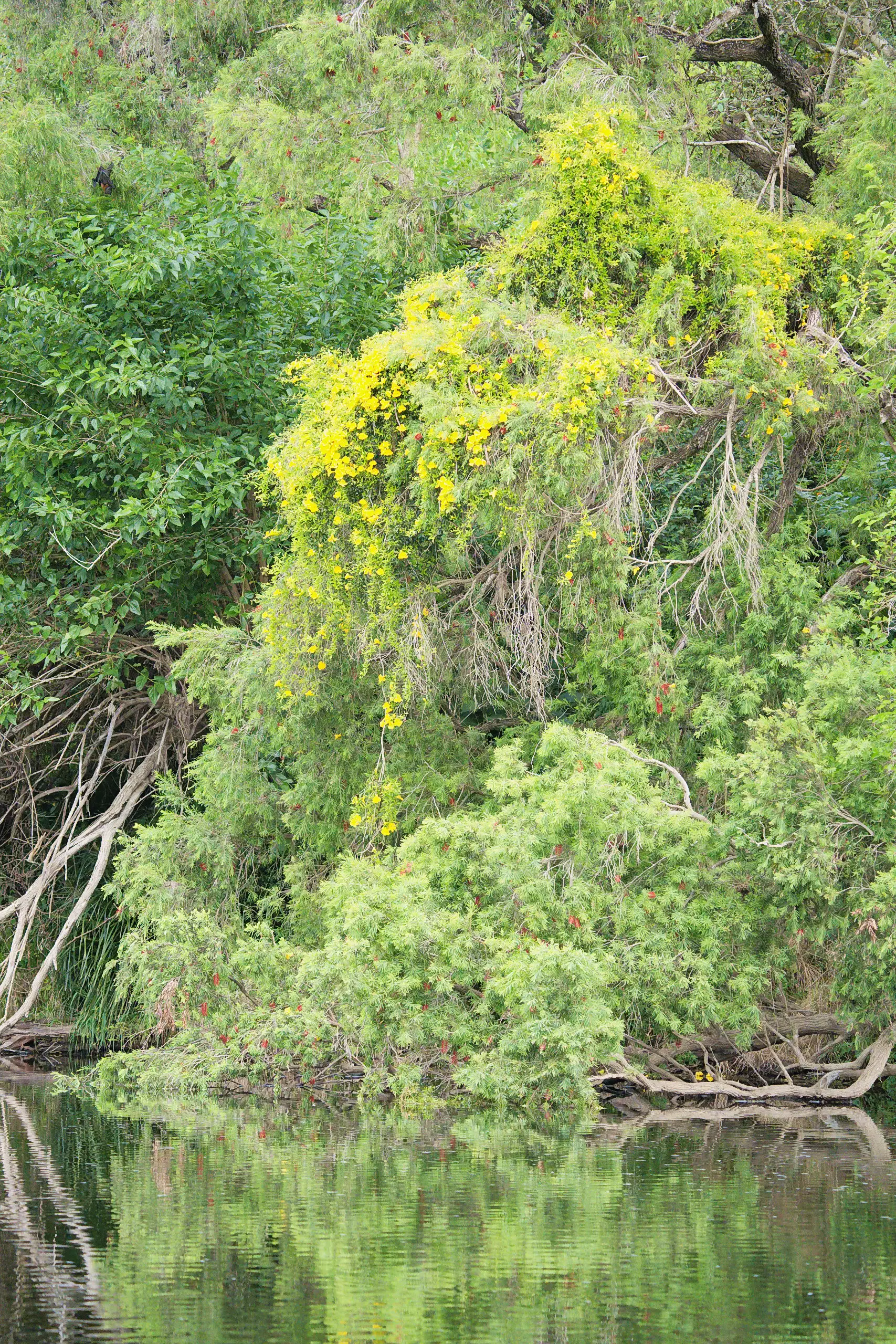
The far bank, with a yellow-flowered vine climbing right over the trees and the bottlebrush flowering red underneath. The river doubles all of it.
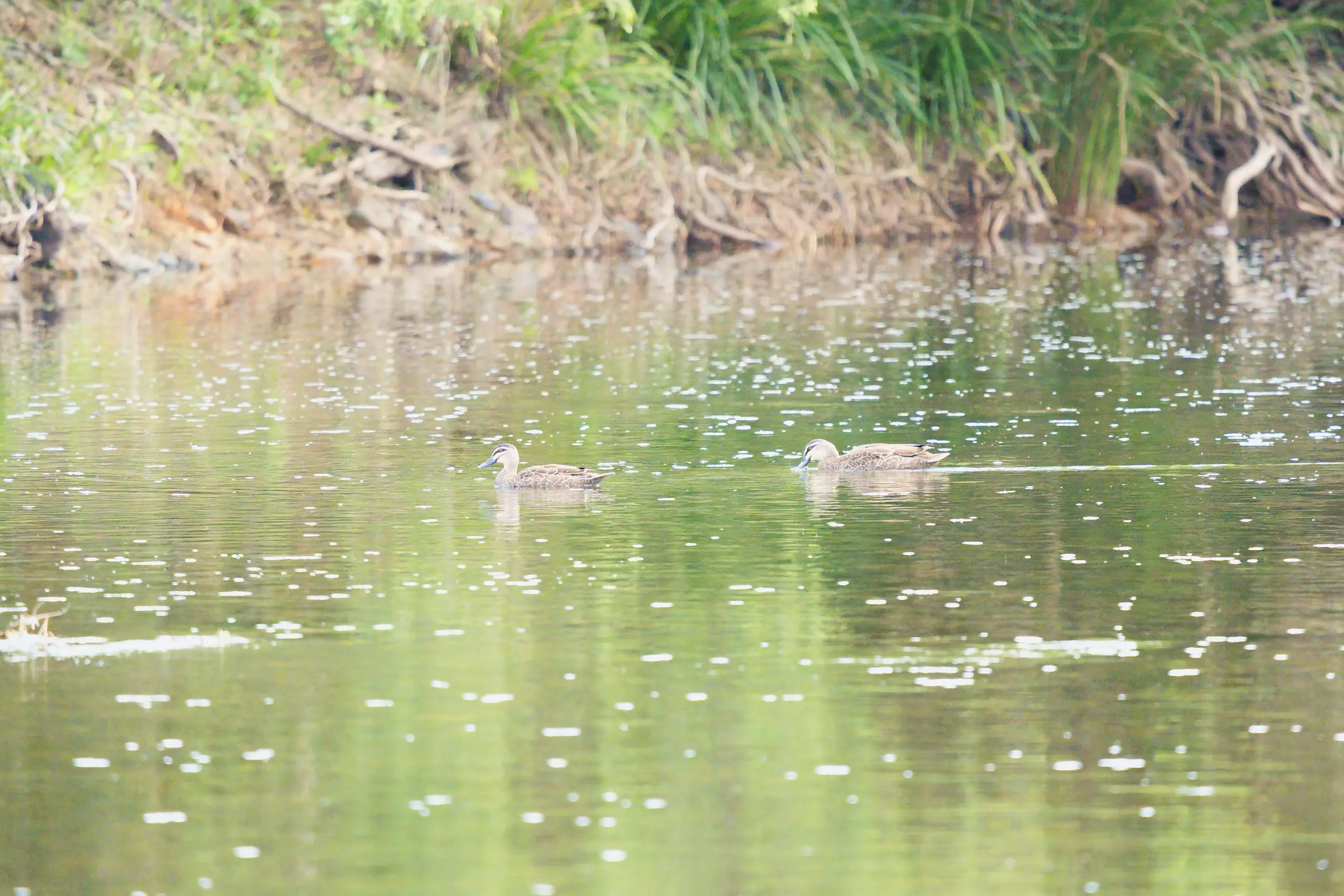
Two Pacific Black Ducks feeding along the river below the far bank. The striped face is the thing to look for.
In the bottlebrush
Most of the morning happened in the bottlebrush along the bank. Find one in flower, stand still beside it, and wait. A lot of the birds came in close.
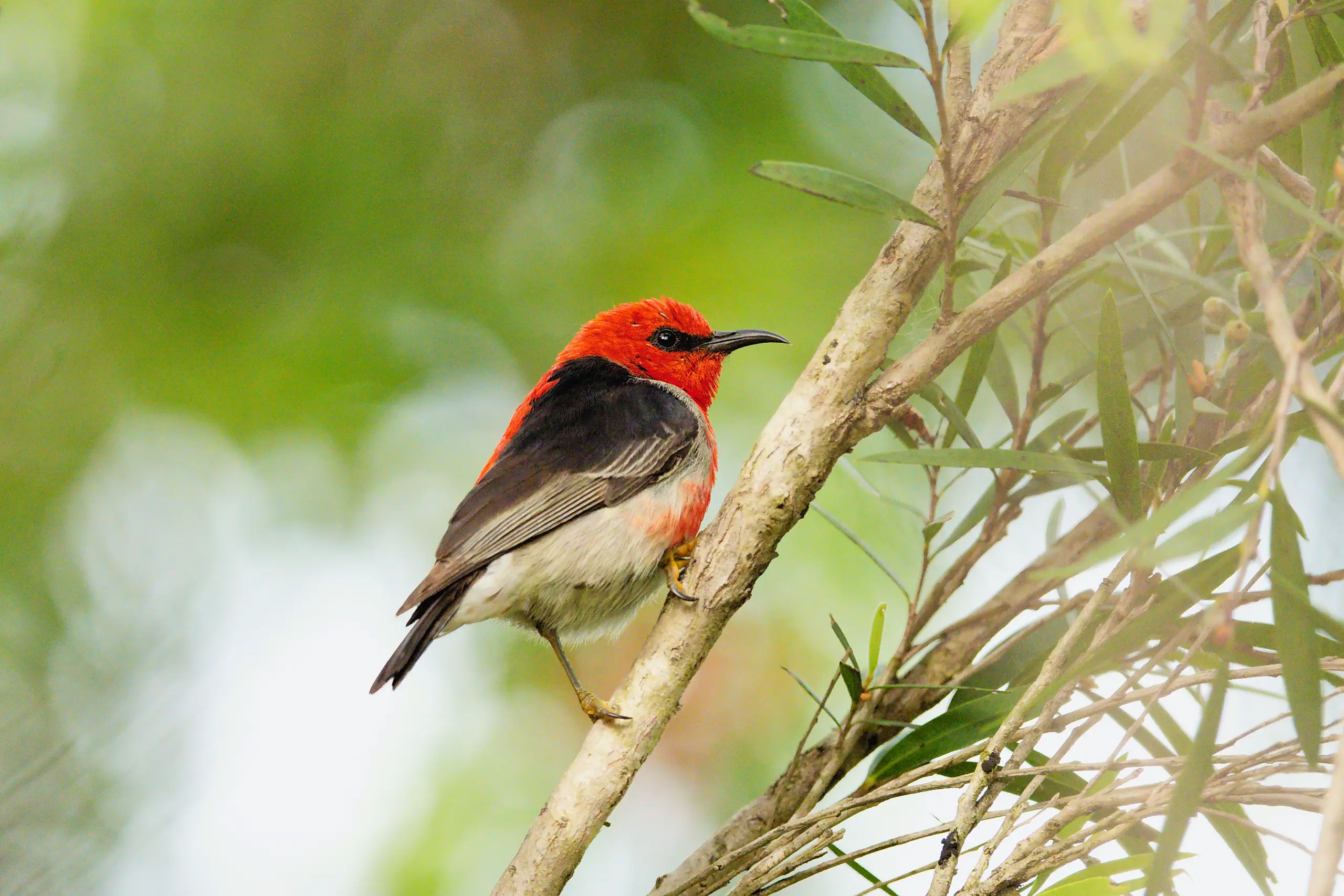
The bird at the top of this page is a male Scarlet Honeyeater. At 9 to 11 cm it is the smallest honeyeater in Australia, and the male is impossible to miss: scarlet head and back, black wings. The female is much easier to walk past.
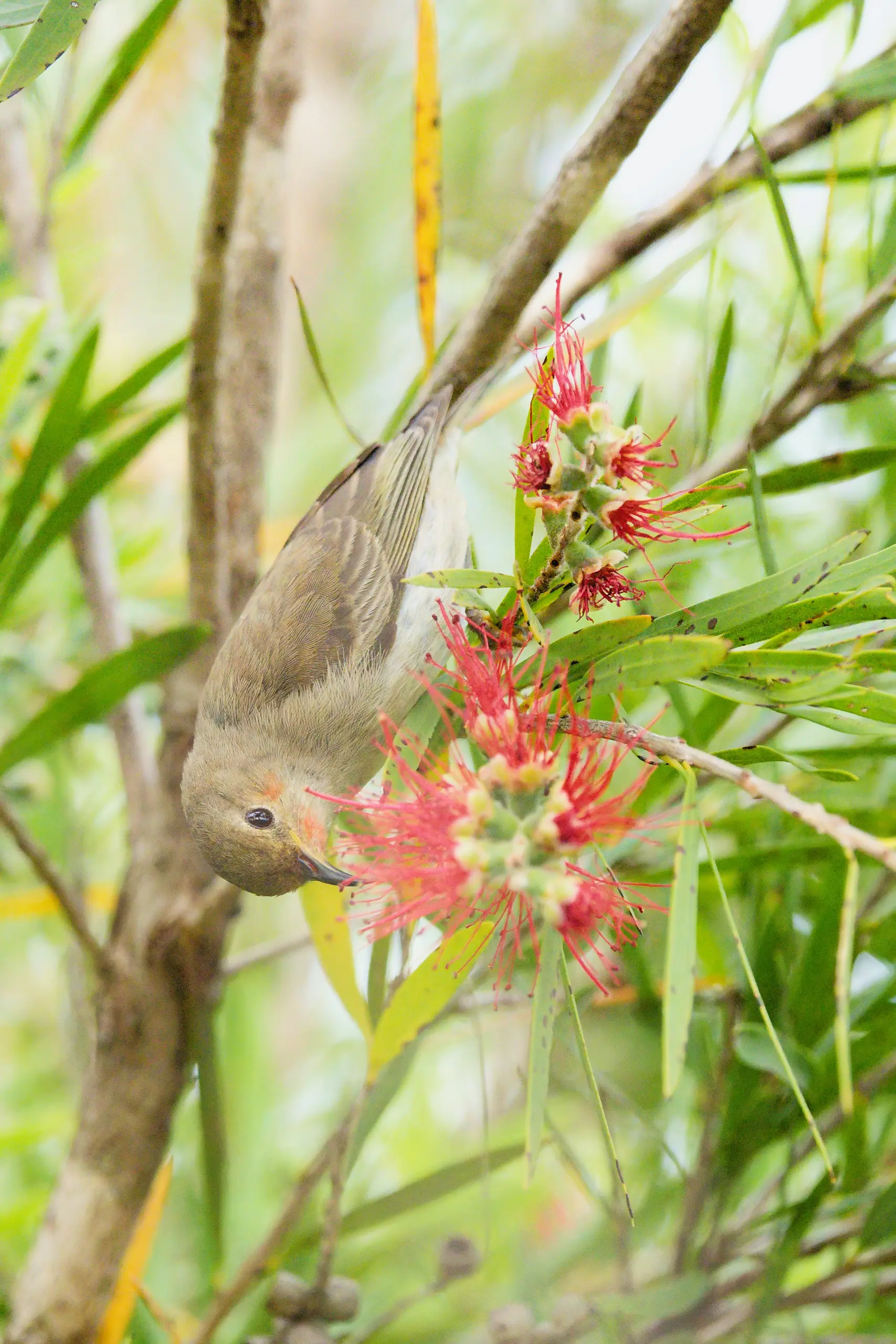
The female is plain brown, with just a wash of red on the chin and forehead. This one hung head-down to get her bill into a bottlebrush flower.
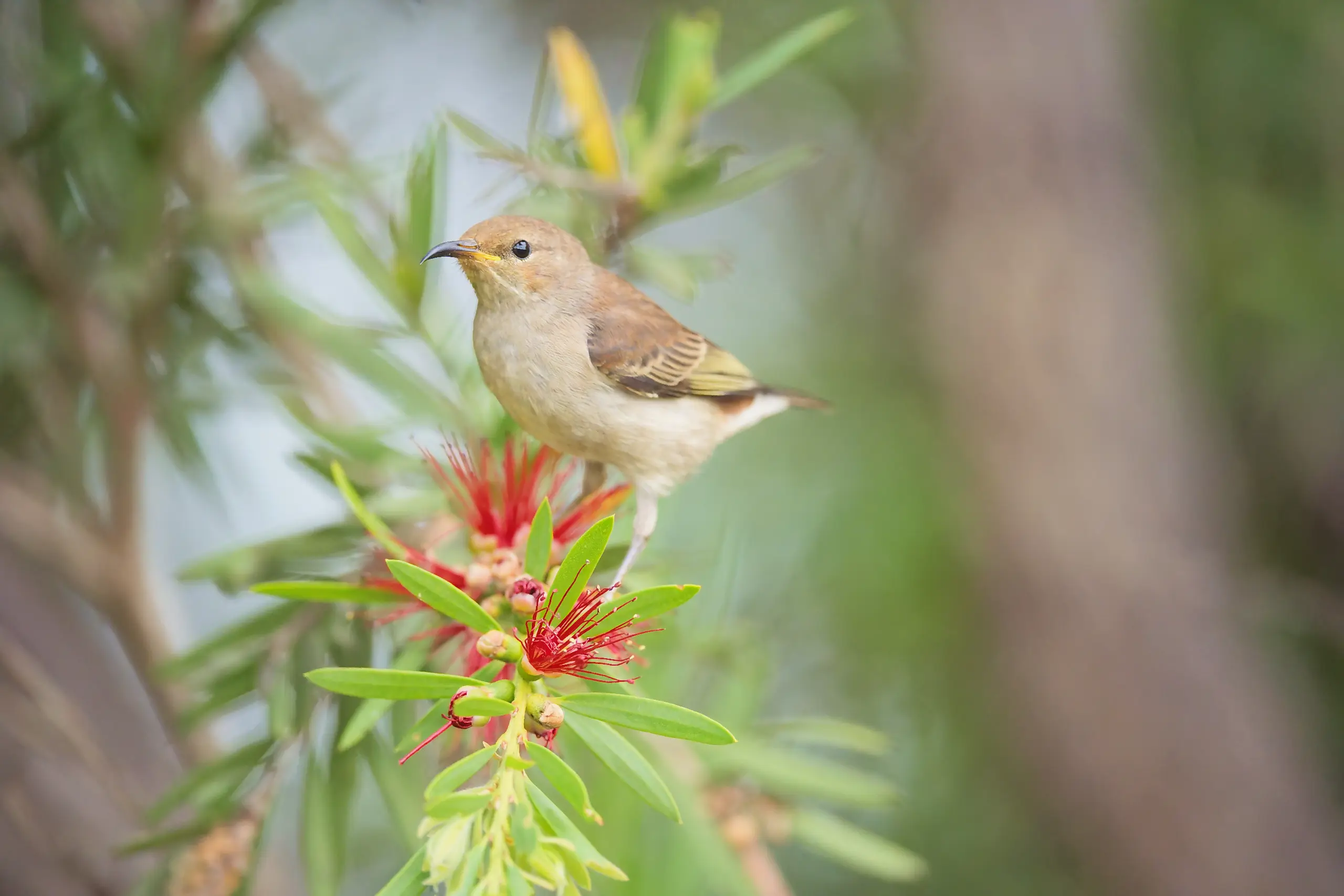
A young honeyeater, still with the bright yellow corners to the bill that recently fledged birds have. My guess is a young Scarlet Honeyeater, but I can’t rule out a Brown Honeyeater, so I’m leaving it at that.
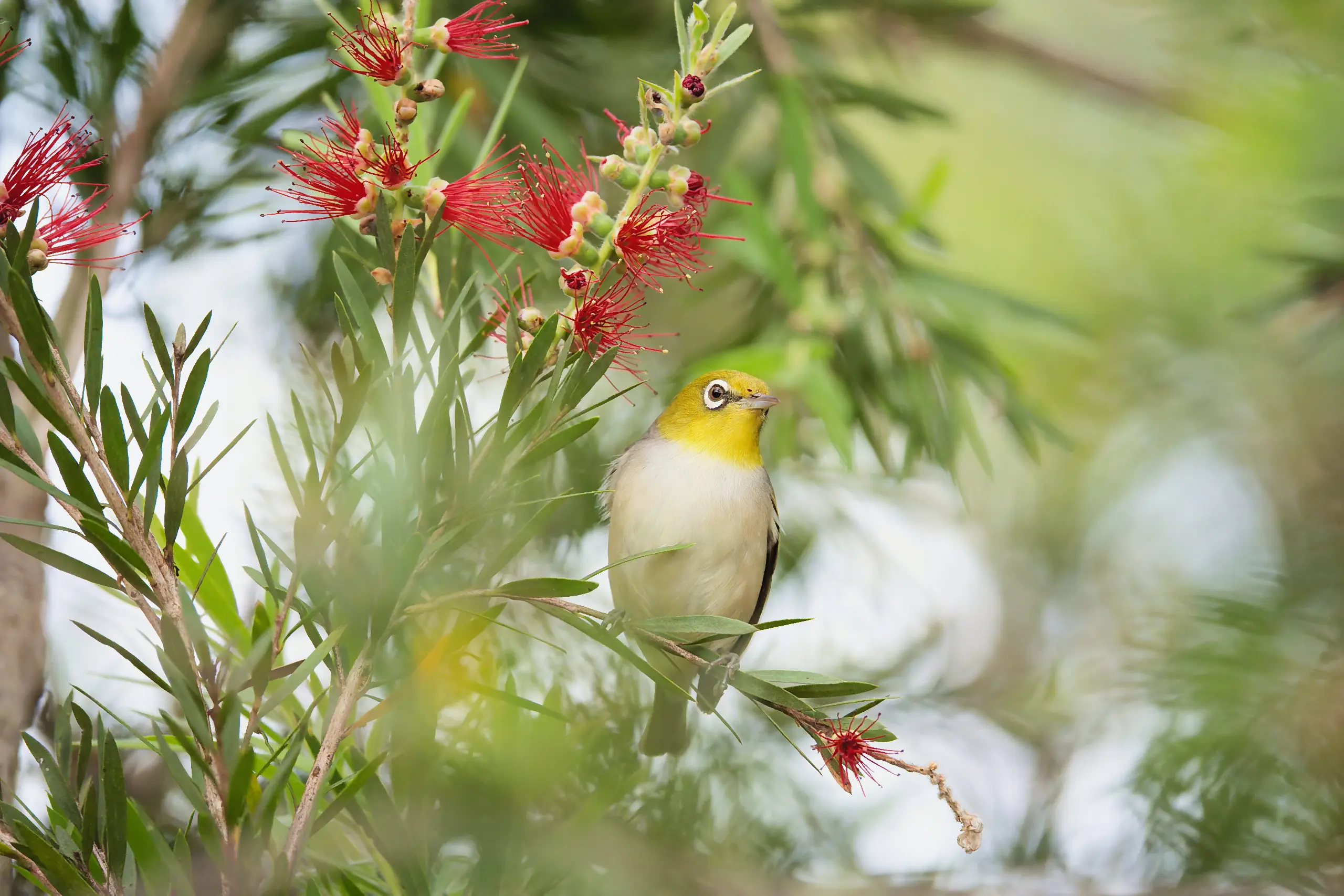
A Silvereye in among the flowers. The white ring around the eye is where the name comes from.
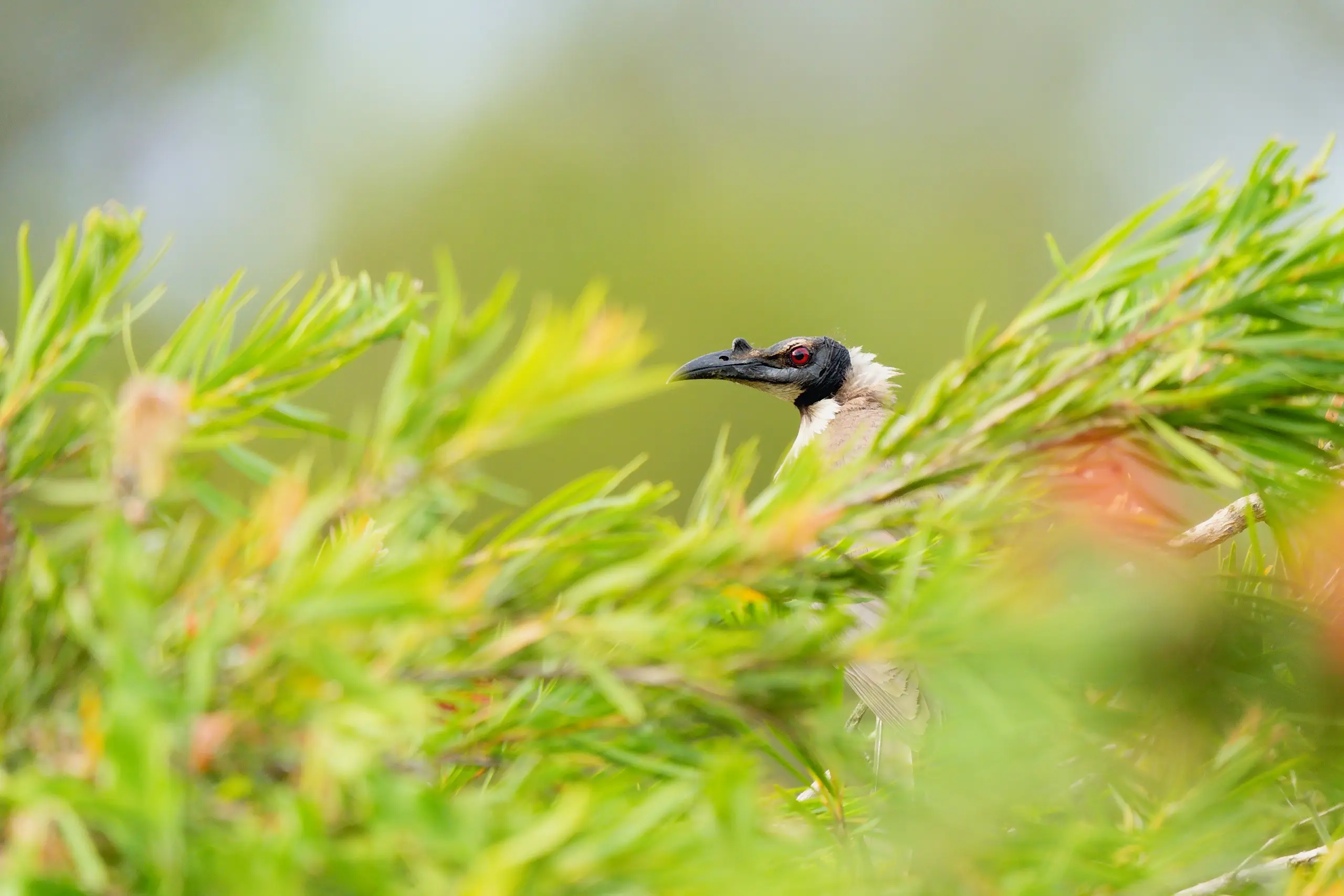
A Noisy Friarbird looking out over the top of a bottlebrush. Friarbirds are named for the bare head, like a monk’s, and this one also goes by Leatherhead. The knob on the bill gives it away even at a distance.
Overhead
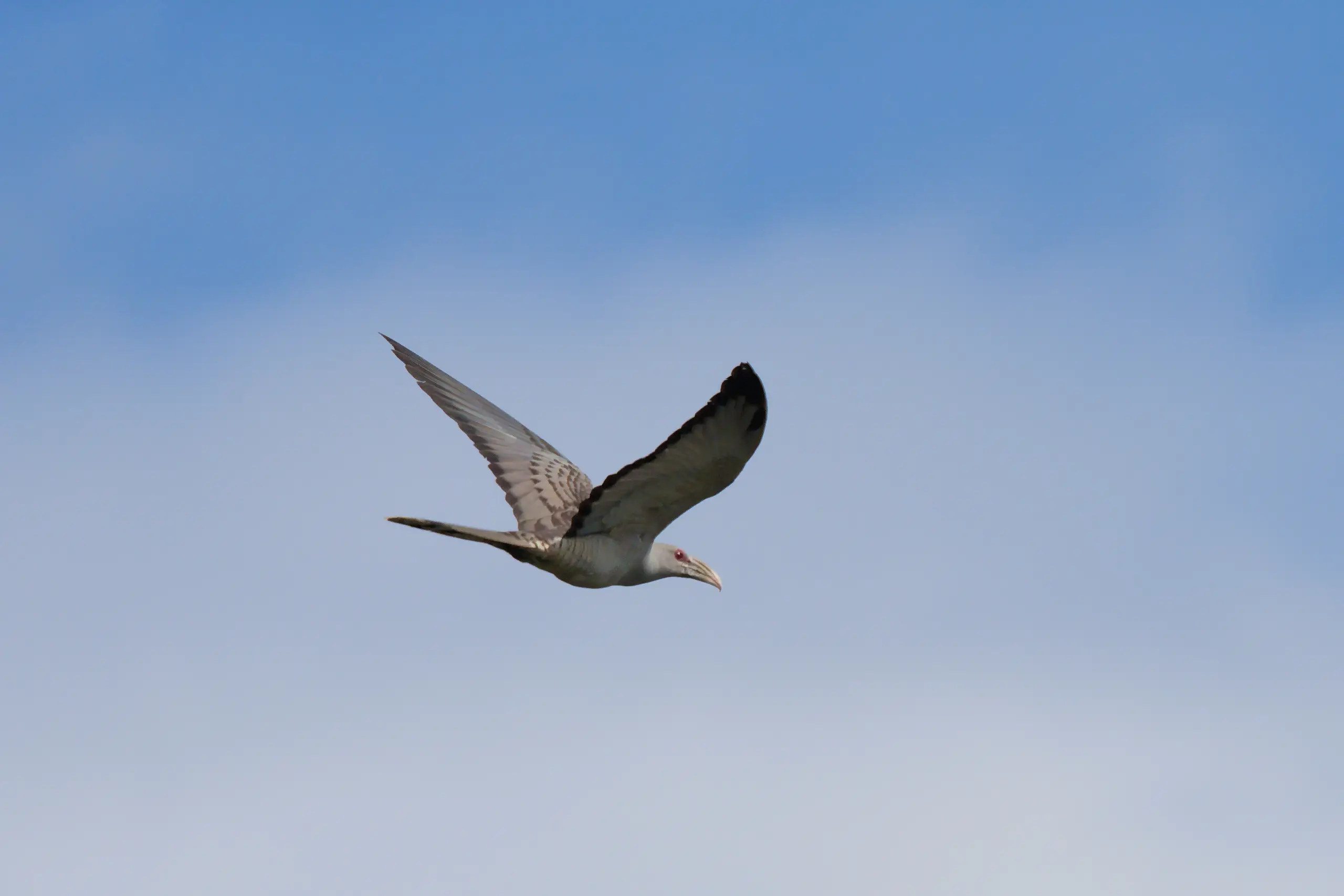
A Channel-billed Cuckoo going over. It is the largest cuckoo in the world, here for the spring and summer from New Guinea and Indonesia, and it lays its eggs in the nests of crows, ravens, magpies and currawongs.
The small stuff
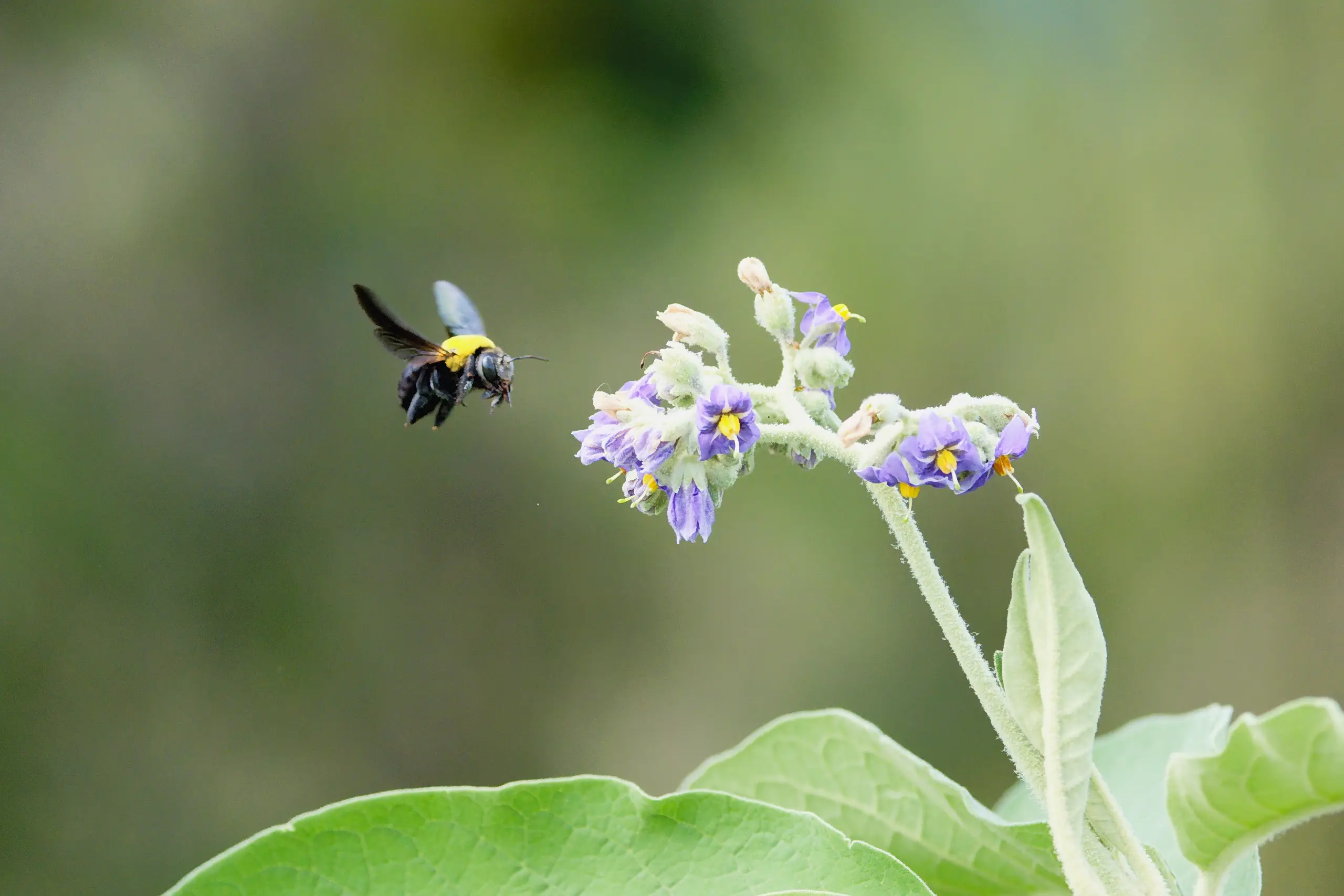
A carpenter bee flying in to a cluster of purple flowers. The yellow band across a black body looks like a female great carpenter bee, a native bee that chews its nest out of soft dead wood.
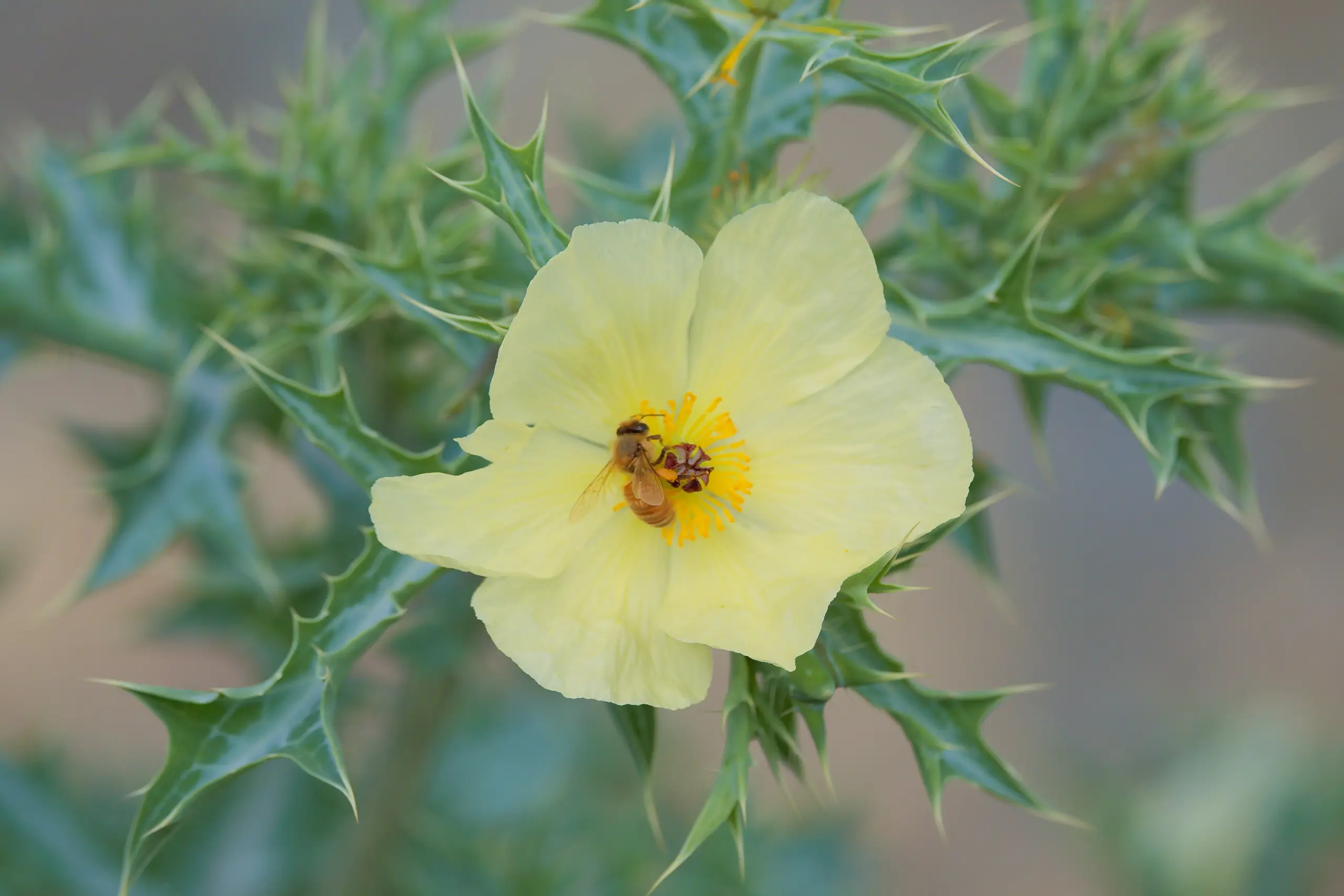
A honey bee with a load of pollen on its back legs, in a Mexican poppy. Pretty, but it is an introduced weed, poisonous to stock, and common along rivers all over NSW.
The morning’s list
Photographed: Scarlet Honeyeater (male and female), Silvereye, Noisy Friarbird, Channel-billed Cuckoo and Pacific Black Duck, plus one young honeyeater I could not pin down, a carpenter bee and a honey bee.
Making a day of it
Belmore Swamp is on the other side of Kempsey, about 40 minutes from the bridge, and it is the opposite kind of birding: open floodplain and waterbirds instead of a riverbank full of honeyeaters. Temagog first thing, then back through Kempsey to the swamp, makes a good morning.
Where to stay
Temagog is a day trip from the coast, and the one to remember when the wind turns onshore and the beach is no fun. All three of our nearest towns are 45 minutes to an hour away, through Kempsey.
Crescent Head is the closest. It is the surf town on this stretch, with apartments and houses near the point, a holiday park on Killick Creek and simpler places for surfers. It books out fast over summer, Easter and good swells.
Hat Head is the quiet one: a tiny village wrapped in national park, with a clear creek, an empty beach and kangaroos on the headland. It is mostly holiday houses plus the holiday park on Korogoro Creek, and the houses book out months ahead for summer.
South West Rocks has the most choice on this part of the coast, from motels and apartments around Horseshoe Bay to holiday parks on the creek and the beach.
Kempsey is the closest town of any size, back down Armidale Road, and the place to fill up and buy lunch on the way through.